
Children’s Dental Health Basics: What Every Parent Should Know
A child’s first dental visit can shape a lifetime of oral health. That single appointment — whether it happens in Manchester, London, or Manhattan — often determines whether a child grows up seeing the dentist as a friendly helper or a source of anxiety. As a cosmetic and general dentistry practice in Manhattan, New York, we regularly hear from UK parents who want straightforward, no-nonsense advice about their children’s teeth. This guide covers everything from that first check-up to daily brushing routines, plus clear post-op instructions for the moments when things don’t go to plan.
Why Early Dental Care Matters for Children
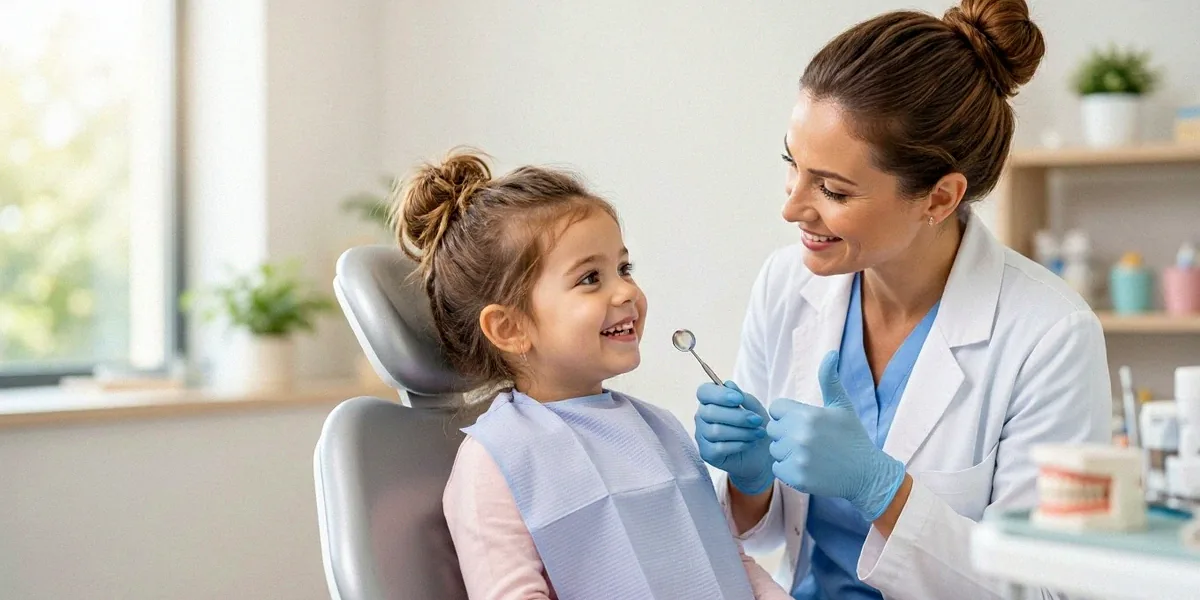
Tooth decay is the most common chronic disease in children, and it is almost entirely preventable. NHS data shows that around 23% of five-year-olds in England have tooth decay — roughly one in four children starting school with damaged teeth. That figure is sobering, but it also tells us something encouraging: the problem is largely avoidable with early, consistent care.
Our Manhattan dentist approach focuses on prevention from the very first tooth. We would rather see a child every six months for a quick, gentle check than treat a cavity that could have been stopped in its tracks. The same philosophy underpins children’s dentistry across the UK, where NHS dental care for children under 18 is free — there is genuinely no financial reason to delay that first appointment.
The First Tooth, The First Visit
Most babies get their first tooth at around six months, though the range from four to twelve months is completely normal. From the moment that tooth appears, it needs cleaning — a soft brush and a smear of fluoride toothpaste is all it takes. The UK’s ‘Dental Check by One’ campaign recommends a dental visit by a child’s first birthday, and we agree entirely. An early visit is short, friendly, and mostly about getting your child comfortable with the chair, the lights, and the people in masks.
How Baby Teeth Set the Stage for Adult Teeth
Baby teeth are not disposable. They hold space for adult teeth, guide them into the correct position, and support speech development and chewing. Losing a baby tooth too early to decay can cause adult teeth to drift and crowd, which often means orthodontic treatment later. Keeping those first teeth healthy is one of the simplest investments you can make in your child’s future smile.
Your Child’s First Dental Visit: What to Expect
We recommend a first visit within six months of the first tooth erupting, and no later than the first birthday. In the UK, the ‘Dental Check by One’ campaign promotes exactly the same timeline. The appointment itself is far less clinical than parents expect.
We use child-friendly language throughout. Instead of «examination,» we call it ‘tooth counting.’ Instead of a dental mirror, we bring out the ‘magic mirror.’ Your child sits on your lap or in the chair with you close by, and we take a gentle look at their teeth, gums, and jaw development. There is no drilling, no scraping, and no rush.
Preparing Your Child for the Chair
A little preparation at home goes a long way. Try these steps in the days before the appointment:
- Read a picture book about visiting the dentist, so the idea feels familiar.
- Play ‘dentist’ at home — count each other’s teeth with a clean finger or a soft brush.
- Avoid words like «pain,» «needle,» or «drill,» even in passing.
- Book a morning slot when your child is well rested and fed.
- Stay relaxed yourself — children read adult body language remarkably well.
Questions We Hear from UK Parents
Parents often ask whether a wobbly tooth should be pulled, whether thumb-sucking will damage the bite, and how much sugar is really acceptable. Our answers are practical: let wobbly teeth come out naturally, address prolonged thumb-sucking after age four, and keep sugary drinks to mealtimes only. If you are ever in New York, our team is happy to answer these questions in person — and your UK dentist can address them just as well at your child’s next check-up.
Daily Dental Care Routines for Kids
Prevention happens at the sink, not in the dental chair. The NHS recommends a fluoride toothpaste with at least 1,000ppm for children, and that is the single most important detail in any brushing routine. For children under three, use a smear; from age three to six, use a pea-sized amount.
Supervise brushing until your child is around seven years old. Children simply do not have the manual dexterity to reach the back molars properly before then. An electric brush such as an Oral-B Kids model can help — the timer and smaller head make the job easier — but technique still matters more than the gadget.
Brushing Basics: Age by Age
- 0–2 years: Brush twice daily with a smear of 1,000ppm fluoride toothpaste. No rinsing after brushing — spit only.
- 3–6 years: Pea-sized amount of fluoride toothpaste, twice daily, with an adult supervising and finishing the job.
- 7–12 years: Continue twice-daily brushing with supervision or a check afterwards. Consider a fluoride mouthwash at a separate time from brushing.
- Teens: Twice daily with a fluoride toothpaste, plus flossing or interdental brushes once a day.
Flossing and Mouthwash: When to Start
Start flossing as soon as two teeth touch, usually around age two or three. Floss picks or child-sized interdental brushes make this easier for small hands. Mouthwash is a later addition — it should not replace brushing, and children under six should not use it at all because of the risk of swallowing. From age seven, a fluoride mouthwash used at a different time from brushing can add useful protection.
Teeth Whitening and Cosmetic Dentistry for Children: What’s Safe?
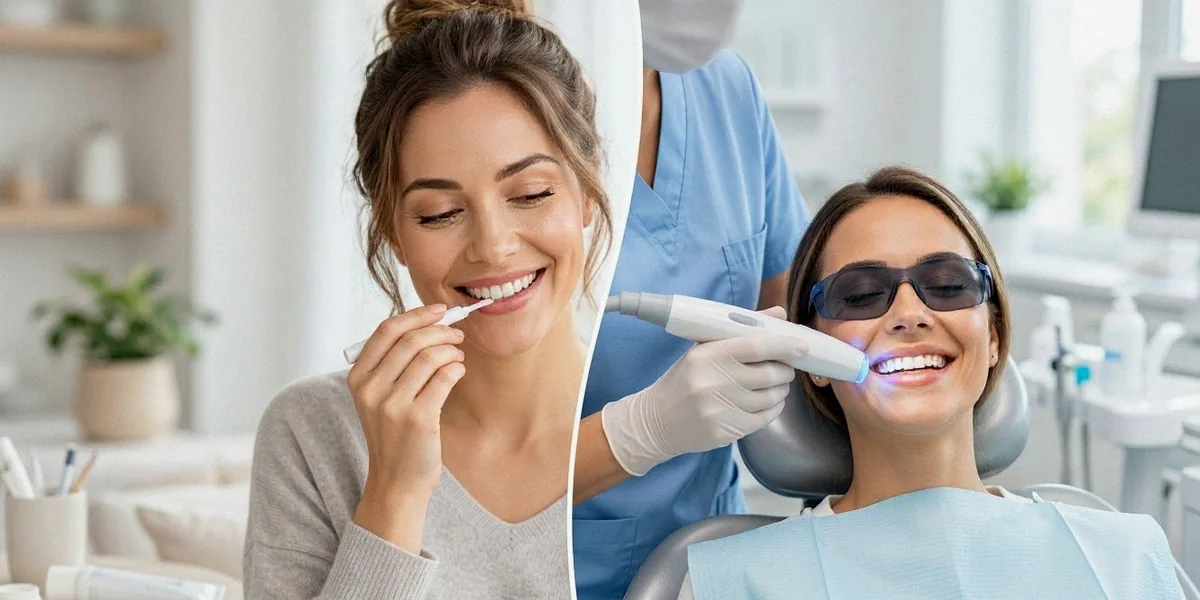
This is where we are firm: teeth whitening is not recommended for children under 18, and UK regulations prohibit it. Whitening products contain bleaching agents such as hydrogen peroxide that can irritate developing pulp and damage enamel that has not yet matured. No child needs whiter teeth — they need healthy ones.
The same caution applies to most cosmetic dentistry. NYC-style smile makeovers, veneers, and bonding are treatments for adult teeth. We explain to families that cosmetic work should wait until enamel is fully mature, usually in the late teens or early twenties. In the meantime, we offer child-safe polishing, which removes surface staining from fizzy drinks and berries without any bleaching agents at all.
Why Whitening Kits Aren’t for Kids
Over-the-counter whitening strips and gels are designed for adult enamel thickness. In children, the enamel is thinner and the pulp chamber is larger, so bleaching agents penetrate more easily and can cause sensitivity or long-term damage. If your child is self-conscious about the colour of their teeth, book a professional clean instead — the difference is often dramatic and completely safe.
When to Consider Cosmetic Dentistry for Teens
Once all adult teeth have erupted and the enamel has matured, generally from around age 18, cosmetic options can be discussed responsibly. Orthodontics, however, is a different matter — braces work best in the early teens while the jaw is still growing. If your teenager is concerned about their smile, start with an orthodontic assessment rather than a whitening kit.
Post-Op Instructions After Children’s Dental Procedures
Most children’s dental appointments involve nothing more than a check-up and a clean. When a procedure is needed, though, clear post-op instructions make the recovery smooth. The ‘Dental Trauma Guide’ is an excellent international resource for knocked-out or broken teeth, and we follow its guidance closely.
After a Filling or Sealant
If a local anaesthetic was used, your child’s lip and cheek will feel numb for two to three hours. Watch them closely during this window — biting a numb lip is the most common post-appointment injury we see. Offer soft food and avoid very hot drinks until sensation returns. Composite fillings are fully set before your child leaves the chair, so there is no waiting period before eating. Mild sensitivity to cold for a few days is normal.
After an Extraction or Emergency Visit
Bite firmly on the gauze pad for 20 minutes without checking. If bleeding persists beyond 20 minutes, call our Manhattan dentist office straight away. For the rest of the day, avoid rinsing, spitting, straws, and vigorous exercise, and stick to soft, cool foods. Do not poke at the socket. For a knocked-out adult tooth, keep it moist in milk or saliva and seek care within 30 minutes — the Dental Trauma Guide is clear that time is the critical factor.
Building a Lifetime of Good Dental Habits
Habits stick when they feel positive. Praise your child for brushing without being asked, use a sticker chart if it helps, and let them choose their own toothbrush colour. Regular check-ups every six months keep small problems small. UK parents can access free NHS dental care for children under 18, and our Manhattan dentist practice offers a similarly child-friendly environment, so there is no reason to skip appointments on either side of the Atlantic.
Making Brushing Fun at Home
Two minutes feels long to a five-year-old. Try a sand timer, a favourite song, or a brushing app with a cartoon character. Brush alongside your child rather than watching from the doorway — leading by example is the most effective teaching tool there is. If a sibling brushes together, even better.
When to Transition to Adult Dental Care
In the UK, free NHS dental care ends at 18 (or 19 if in full-time education). This is the point where many young adults drift away from regular check-ups. Help your teenager book their own appointments before that cut-off, and explain how to find an NHS dentist or, if they are studying or working in the US, how to register with a practice like ours in Manhattan.
FAQ
At what age should my child first see a dentist?
The UK’s ‘Dental Check by One’ campaign recommends a visit by your child’s first birthday. We suggest booking within six months of the first tooth erupting — whichever comes first.
How much fluoride toothpaste should my child use?
The NHS recommends a fluoride toothpaste with at least 1,000ppm. Use a smear for children under three and a pea-sized amount from age three to six. Always supervise and encourage spitting rather than rinsing.
Can my child have teeth whitening?
No. UK regulations prohibit teeth whitening for under-18s, and we strongly advise against it. Enamel is still maturing, and bleaching agents can cause sensitivity and lasting damage. A professional polish is a safe alternative.
What should I do if bleeding continues after an extraction?
Bite on gauze for 20 minutes. If bleeding persists beyond 20 minutes, call our Manhattan dentist office immediately. Avoid rinsing, straws, and hot drinks for the rest of the day.
Is dental care free for children in the UK?
Yes. Free NHS dental care is available for children under 18, and for those under 19 in full-time education. There is no cost barrier to regular check-ups.
Consistent, gentle guidance from parents and regular professional check-ups are the real secrets to a child’s healthy smile. Brush twice a day with fluoride toothpaste, keep sugary treats to mealtimes, and book that first visit early. If you are ever in New York, our Manhattan dentist team would be delighted to welcome your family — and wherever you are in the UK, your local NHS dentist can provide the same preventive care your child deserves.


Publicar comentario